Here is just some information about a fuzz face pedal I build. I may update the site soon with some of the more crazy pedals, but I may not.
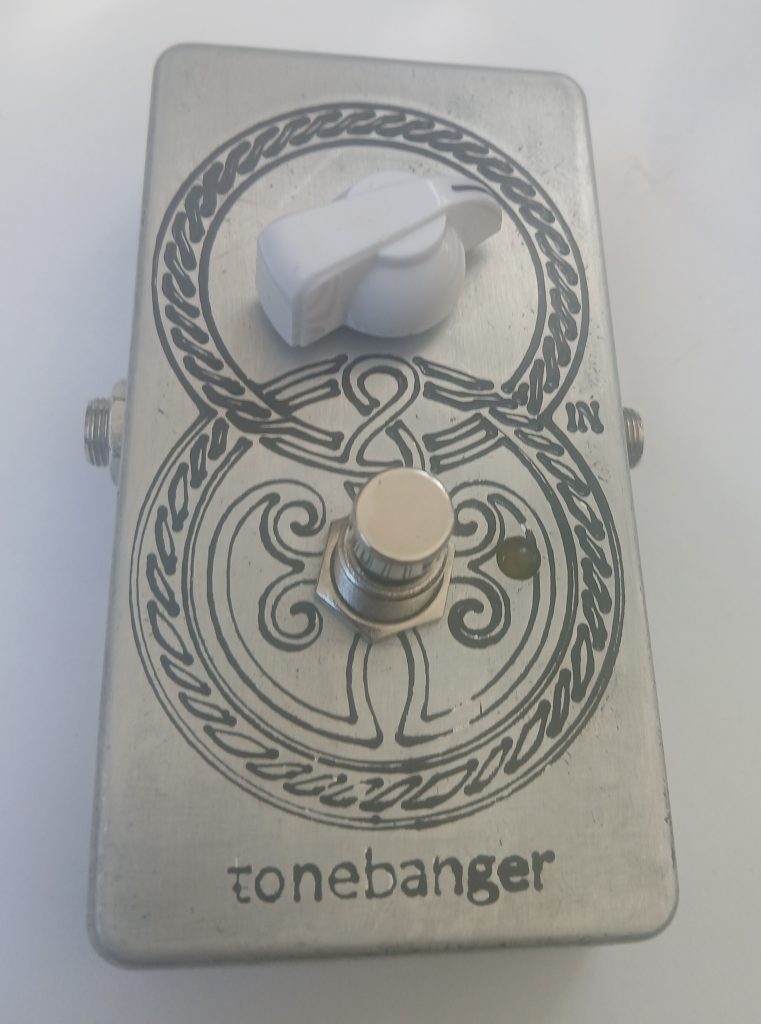


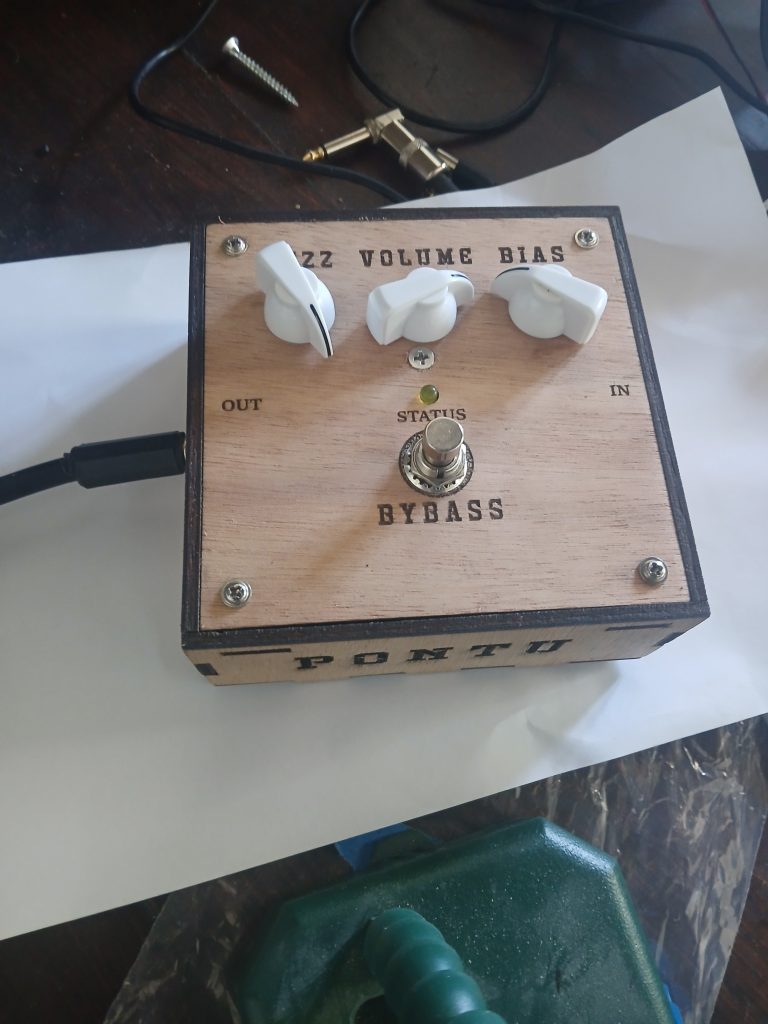
Here is some information about this fuzz circuit:
As this is a fuzz box, it works best as the first pedal in your pedal chain. In common with other fuzz boxes based upon the Tone Bender or Fuzz Face style of circuit, the guitar’s pickup kind of becomes part of the input circuit, due to the low impedance (AC resistance) of the input of the fuzz box. This is a cool feature, which helps you to get some of the best sounds by turning up the fuzz and lowering the volume on your guitar.
This device requires a 9v PP3 battery. It uses PNP transistors, with a positive earth circuit. This is why the pedal uses a battery rather than a power supply. It uses less than 1 milliamp, the LED uses 3 times as much current as the fuzz circuit. A 9v battery, even a cheap one, will last for ages as long as you remember to unplug the guitar from the input jack when not using it. Putting a plug in the input jack is what turns the circuit on. Another reason why this device uses a battery rather than a power supply is because it would require its own power supply, not a daisy chain, because of the positive earth nature of the circuit.
The knob controls volume, fuzz level is always full. With the fuzz first in the pedal chain the guitar volume will control the fuzz level in a much more effective way than the fuzz knob on a fuzz face would.
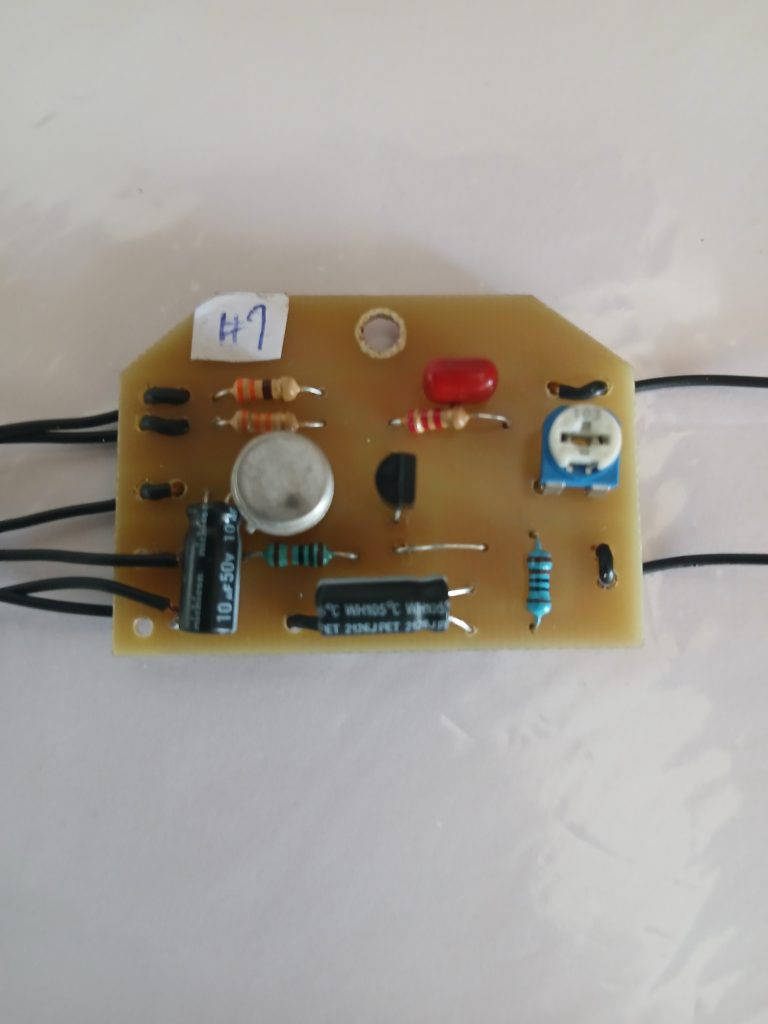
This pedal is based on a Fuzz Face circuit topology. The first transistor is a metal capped 2N4033 transistor with a gain of about 195 hFE, the second is a 2N3906 with a gain of about 220 hFE. Everything is subjective but the common wisdom is that for a good fuzz face the second transistor should have a higher gain than the first, in about this ratio.
Inside the case there is a small trim pot you can see. This adjusts the bias on the second transistor. It would generally be set so the voltage on the collector of the second transistor is just above half of the battery voltage. This is generally considered the best sound, but you can get a more open sound, or a more “splatty” gated sound by adjusting this trim pot. Clockwise is more gated, and anticlockwise is more open.